Monday, March 3, 2014

News Update

Just a quick note to let my blog readers know I have added a Moscow Update newsletter to the website.

February was too packed with living to have much time to write.  Spent a day at an art gallery.  Enjoyed Valentine's Day celebrations, scribbled some words at the coffee shop - but no time to sit still and just write.  I'm afraid if March walks past at the same pace there will be a war of the words crashing onto my keyboard!  

Until then, here's the latest link:  MOSCOW UPDATES

Thanks for stopping by!  

Sunday, January 26, 2014

Wait-y Words

It’s been a bit since I sat down at the computer to write on purpose.  I have done some scribbling and some rambling, but they aren’t words for sharing, just for emoting. 

I’m not sure where my serious words have gone.  I apologize for having lost track of them.  I know you are waiting to hear all about my marvelous Moscow adventures.  But the words are winding elsewhere winging away on the winter wind.

I go from here to there in Moscow surrounded by millions of people.  I am lost in a sea faces moving from one place in line to the next.  Forced to walk the pace of those before and behind and around me.  I am closer to them than to any other human being here, but without words.  We move in syncopated silence. 

I purposed to share that with you in a long short story so you can see through my eyes, but there seemed no reason for the writing.

Yesterday I sat down on purpose with a blank sheet of paper before me and started six time – SIX TIMES – to tell you something important.  But nothing important wanted to be heard.  Stumped, I closed the computer and made my way to the house of a great writer – Count Leo Tolstoy - hoping he had left some words for me.   Like a slow-moving lava, the ideas began to surface. 

But not enough to write about.  And evening turned to morning and a new day dawned.

This morning, thanks to modern technology, I saw the home going service of a patriarch of Pentecost - Bishop Frank Tamel.  In true Pentecostal fashion there was rejoicing and laughter and much, much music.  Story after story was told of the influence of this man.  Thousands of voices rose together in affirmation of the affect this life had had upon their lives. 

There, in the middle of the Pentecostalisms, in the middle of the crowd thousands of miles and hours away the words began to form.

One of the sons of the deceased told the story of how one man talked to another man who was the father of the Bishop.  Because the man and the father spoke, Bishop eventually gave his life to Jesus.  One conversation caused a chain reaction shift that changed an entire city worth of lives. 

Imagine that.  One man talking to another man offering a simple sentence of hope. 

It occurs to me that the real reason words exist is to communicate a message between persons.  I have something to tell.  You are listening to what I am saying.  If my message is mundane, you will quickly lose interest and move on to another conversation elsewhere.  When the words are hiding, it is because they think they have nothing to say.

As a Christian, as someone whose life has been changed by a message of grace and hope, my words carry an extra treasure.  No conversation, no communication, no sharing of words is ever rudimentary, it is never useless.

With that in mind, I thought again of what I have to tell you. 

Much is happening here in Moscow.  It is easy to make an acquaintance in Moscow, but not so easy to make a friend.  There is a definite distinction.  Yet, I find the grace of God creates a strong bridge easily crossed regardless of language and culture. 

I have mentioned before my classroom full of bright, curious minds.  One of them is a Muslim girl who is always quick to raise her hand to pray “In Jesus Name!”  She loves to read the Bible and to tell the stories she is learning.  Another child has asked me to write down the simple prayers we pray in class so he can teach them to his family at home.  Yet another comes to me frequently with Bible questions.  Those conversations are eternally valuable and only time will tell how many lives are affected.  I hope I don’t brush them off as incidental conversations, but see the weight they carry like the man-to-man conversation above.

My classroom is also a place where parents come to talk with me.  Sometimes we talk about their children, sometimes we talk about them.  Mothers in difficult situations have sat at my table as they tried to sort out what the Bible teaches, what does God expect of them.  I find myself struggling for words of hope.   I recall my own dark nights of the soul and dredge up the hopeful verses that shone brightly into my life.

This room is also a place of prayer.  I pray there myself, often as a means to keep balance when the students’ personalities ignite one another to mischief.  I pray there also with my colleague as we seek God’s help for problems bigger than our experience.  The joined faith of those words brings courage to us as we listen to the other.

Yes, there is much to talk about in Moscow.  It’s not that the words have escaped me.  They have just found another way to be expressed.  I hope that my words would have a lasting impact on many generations.  I hope that my faith would create a chain reaction so explosive a city’s worth of people can be changed.

I have decided that words are treasures to be spent lavishly.  If you feel you have run out of words, just wait a minute.  They will come.


Monday, January 6, 2014

Latest Newsletter

For those of you who are only connected through the blog, here is a link to the latest Moscow Update Newsletter.

Hope this finds you enjoying a blessed start to 2014.

Enjoy!

Kris


Sunday, December 22, 2013

I'm the Project

I have met many new acquaintances, and some very good new friends, here in Moscow.  One of them is an English teacher who has assigned me to several of her students.  They are to take me places in Moscow and speak only English with me.

To me, this is an amazing opportunity to see this marvelous city through the eyes and experiences of the young people who will be leaders of the next generation.

Yesterday was the first event in the project.  A young man, Sergey, was in charge of me for the day.  He said we would go to a conservatory for a free concert performance involving graduates and students.  He didn't know exactly what to expect, only that there would be music and it was free.  

Although my words below do not begin to scratch the surface of the experience, I wanted to get the words out of my hands before they are lost.  Some of these phrases were formed while I sat beneath the music's spell, others while I slept last night.  

We met on one of the platforms of one of the stations that lay deep within the earth beneath the center of Moscow.  I can't tell you exactly where we were from the outside of the Metro, but from within it was the Red Line station - I call it Lenin's Library because that is my scratchy translation.  I scurried behind my guide glad for his height making it easier to keep track of him through the maze.  Once upon ground we sloshed between the slush and the snow and the freezing rain, dodging people and traffic and flying puddles, we made our way to an impossibly old building.  


If you have ever been to a piano recital you could describe the audience we joined.  Parents, grandparents, instructors, siblings, roommates and assorted other supporters politely lined the small hall where the first performances would be held.  Sergey read through the program and tried to explain it to me.  

It's funny, really, as much as I enjoy classical music I don't have any knowledge or training in it.  I don't know Bach from Chopin, but I know what I like and I know when something is properly executed.  I just do.  I've not had a lot of exposure to it and it's not something I would turn the radio dial to.  Yet, here I was infinitely excited to be seated in this lovely place anticipating lovely music.

The hall was a room really with high ceilings framed with careful molding and painted a soft yellow.  In the center was a stunning crystal chandelier.  I wished instantly for my good camera when I saw it.  

"Oh my!"  I said aloud.

Sergey looked around puzzled.  "What?"

"Look at that!  It's so beautiful!"

He sort of laughed and shook his head doubtless wondering about his addled American project.  

As the music began I watched as light and music danced together along the crystal beads playing with centuries of sound and life.  These chords so new to the young rang richly with history to the old.  Crossing generations, politics and lifestyles the music breathes.  

I watched one particular pianist who diligently worked to maintain decorum.  It was good for her to be a part of a duet as it allowed her some freedom while helping her follow the straight lines of the piece.  Her hands and face danced jubilantly with each note played.  Floating along the keyboard, she had forgotten her audience and played only for the joy of sound.  I couldn't help but wonder where her imagination took her as the music sang to her soul. 

I looked around the room more closely at the audience.  It occurred to me that many of them had been raised during Soviet times, some even during Stalin's reign of terror.  I watched the music behind their eyes and wished I could ask them where the memories of the music took them.  Did they see days when music was taken from them and given to another?  Or was music given the people in a general sense as a replacement for God?  The need for beauty and purpose did not cease when the government decided that God was for fools.  Rather, it found a new avenue and I wondered how that affected these lives around me. 

Leaving the small hall behind, we joined the larger performance venue to see who might perform there.  We were pleasantly surprised to find children showcasing their talents.  Even more spellbound I sat watching them participate in centuries of timeless expression.  

I considered how I was surrounded by a rich heritage of beauty and art in these rooms and yet I seemed the only one entranced by its significance.  Perhaps the others had been there so many times, had heard the beautiful notes so frequently, had listened to the crescendo and fall until it had all become common place. These audience members have been here before.  To them this is lovely, but not stunning.  

It occurred to me that the participants in this act playing out before me were much like their American counterparts.  I have watched my friends in Russia stand amazed when they encounter a divine touch from God.  When His quiet amazing presence fills a room, the awe on their faces is easy to see.  Often in America it is not so.  Many of my American friends are so awash in His grace and presence, it has become common place to them.  Bored, they look around, chat idly, play on their cell phones - and don't even notice He is there.

Afterwards I walked with my young friend down Arbat Street.  Fresh new architecture lines the sky above centuries old, solid buildings.  At the end of the avenue one of Stalin's Seven Sister buildings holds court.  The contrasts are stark here.  Western capitalism is making its mark, but not without allowance made for Russian tradition.


At the close of the day, the music warmed my heart and caused me to smile long into the wintry walk home.  I find I am rather excited to be a part of this project.  My next tour guide is expected to take me to an art gallery and then another will take me to the Kremlin.  God is good.  That's a fact!


Friday, December 13, 2013

Tolstoy? Timeless!

Now that I'm in Moscow I find myself discussing Russian literature at odd turns and my love for Tolstoy's short stories always rises to the surface.  

My Russian friends look at me oddly as if to say, "Of all the great Russian writers, you pick Tolstoy?  You are a crazy American!"

In my defense, I thought I would post a reprint of an article I wrote in 2003 for the e-zine Ninetyandnine.com.  I believe it will help you understand my fascination with Tolstoy's work.  I love his use of language and the twisting of his allegories.  I am curious about his life and how he saw himself though the lens of a Christian.  I am drawn into his teaching - but not quite as much as those who followed him religiously.  

So here I go throwing words into the universe which I hope will inspire you to read some great words, to think on some broader views and to strive to consider the value of your fellow man.  

What does a writer do in a Moscow winter?  Studies great writers to learn to write!

----------------------------------------

Tolstoy? Timeless!
What Men Live By
By Kris A. Newman
November 3, 2003

In an age where we are inundated with information, sometimes it’s hard to remember what the nitty-gritty of Christianity is all about—is it found in worship? Is it found in Bible memorization? Is it found in hearing the best preacher? Isn’t there someone who can tell us the simple rules that men ought to live by?

Actually, the simple lesson has been found. Count Leo Tolstoy wrote it many years ago in his novella and short story collection entitled What Men Live By and Other Tales.
It begins with What Men Live By, where we find an angel named Michael, disobedient to the plan of God, has fallen to earth and relies upon the mercy of a simple peasant family. Michael is assigned three lessons to learn—what dwells in man, what is not given to man, and what men live by. Unwittingly, the peasants and their neighbors teach him the answers.

Woven through this beautiful allegory of giving is a sense of common beauty. The beauty of family life and community breathe through every chapter. Tolstoy’s characters live simply, unburdened by the traps of possessions. They have one another. They have their work. They have God. What else could they need? They are not oblivious to the grand riches of the wealthy around them. Rather, they are satisfied with the richness of their relationships.

The first lesson is learned when the peasant looks beyond his own discomfort to share his coat and clothes with Michael as he suffered by the wayside. The peasant’s wife, likewise, has pity on Michael. They feed him, clothe him, and give him work. Their kindness teaches Michael that love is what dwells in man.

A year later, a verbose, obnoxious wealthy man demands that Michael make him a pair of boots from a specially tanned piece of hide. The rich man threatens that Michael will not be paid for the work unless the boots last for an entire year as if they were new. Michael, however, sees the death angel hovering near the rich man. He knows that God is about to take the man’s life. Carefully, he cuts and stitches the leather into a very fine pair of slippers. While the confused peasant is reprimanding Michael for wasting the gentleman’s materials, a messenger enters to tell them the gentleman perished before arriving home. They will need burial slippers instead. Thus, it was learned that it is not given to man to know what he needs. One must rely upon God for his needs to be met.

Several years pass before the final lesson is learned. Through the telling of a sad story with a rich ending, we learn that men live by love for another.

I John 4:20 tells us, “If a man say, I love God, and hateth his brother, he is a liar; for he that loveth not his brother whom he hath seen, how can he love God whom he hath not seen?” (I John 4:20). Tolstoy is clearly teaching this lesson in What Men Live By. This thought is exemplified by the last line of the story, “All men live not by the thought they spend on their own welfare, but because love exists in man.” When we learn to give, we discover a new depth in God and the relationship He has with us.

Continuing on this theme, Tolstoy moves on to “Three Questions,” the story of a king who seeks to find the answers to these questions—“What is the most important thing to do? Who is the most important person? When is the most important time?” The answers are found when the king becomes actively engaged in helping others. The busier the king is about giving, the happier and safer his life becomes.

“The Coffee House of Surat” explores thoughts of spiritual prejudice and misconception. A discussion of religiosity introduced by a bitter, deceived man causes a disruption in the coffee house. Finally, a student of Confucius quietly addresses the crowd. He likens God to the sun and man’s ideas of God to their ideas of the sun. He concludes that the more learned a man becomes about the subject of God, the more he realizes how big God is, how small man is; He points out that our relationship with God should draw us closer to one another and never cause us to become haughty.

Finally, the Devil presents himself to a man who is overcome with greed in “How Much Land Does a Man Need?” Driven to succeed, Pahom continues seeking after the elusive perfect piece of land. Finally, the title question is answered—six feet deep by six feet long. That’s all you have in the end.
It is common knowledge that the great Russian author was a wealthy landowner. How, then, could he write about peasant life, and why would he choose peasant life as his recurring subject in this book? (After all, he did write War and Peace.)


However, Tolstoy had a spiritual awakening of some sort in his later years. Realizing his need of people rather than riches, he denounced the money he made, freed his serfs, and worked among them as an equal. Thus, his teachings relating to Christianity flow from a forgiven heart.

Although rife with historical intricacies, the substance of Tolstoy’s teaching is timeless. Likewise, the opium drink in the coffee house was a common thing in Tolstoy’s day and certainly not allowable today. However, coffee houses still brew conversations and discussions as meeting places for bright minds.

Tolstoy is worth reading. Just don’t start with War and Peace. Start with his short story collections. You need go no further.

ninetyandnine.com
© 2003, Kris Newman

Sunday, December 1, 2013

New NewsLetter Link

Earlier today I took some time and put together an updated newsletter.  Many of you keep up with me on Facebook or through e-mail updates, but some don't so I will post the link here, also.

I really love being in Moscow.  There is something profoundly good feeling about being in the middle of the work of God with that as the primary focus of existence.  And besides, I love teaching.  

I'm in a good season.  Despite the challenges, the unending complications for simple things, the unfamiliarity of it all - I'm in a good season.

Enjoy the newsletter.  Shoot me a note if you have any questions or comments. I love hearing who is out there.  It's good for my fragile writer's ego.  

Blessings to you, Reader!

Happy December!


Moscow Version of Thanksgiving Dinner

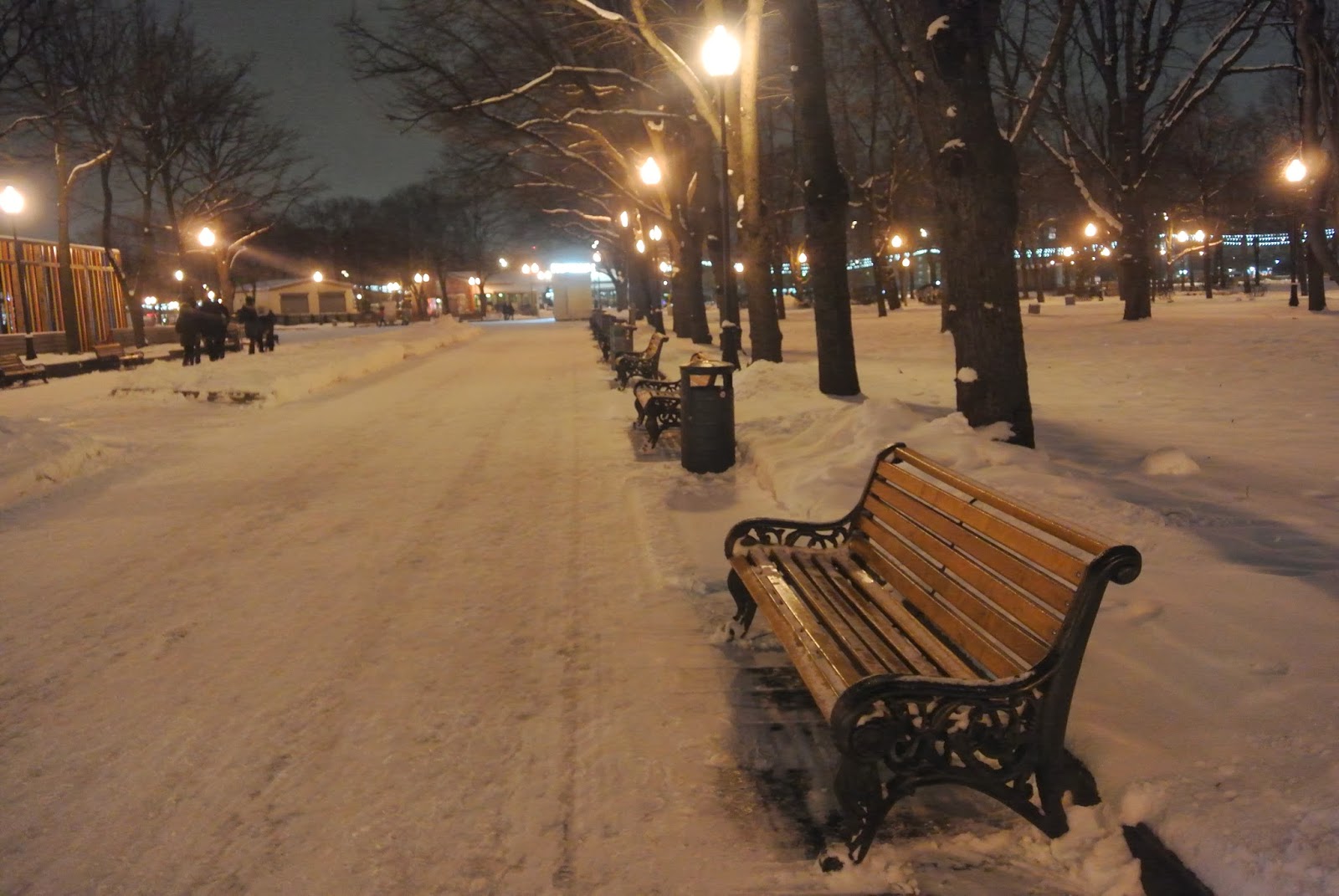
First Snow Collage

Student Gone Wild

Good Night, Moscow!


Saturday, November 16, 2013

Month End

Was I really still working at WRPR a month ago?  Did I really not even have my house packed, my clothes packed, my mind packed a month ago?

It feels like a lifetime ago.

According to my calendar, it was the 20th of October when I boarded a plane to head into this dream.  Today is only November 17th, so it must be less than a month.

So much has happened.  The new job, the new students, the new food, the new constant walking, the new transportation, the new church friends, the new language.... the renewed sense that I am where I am supposed to be doing what I am supposed to be doing.

Not that I wasn't before.  But before I wouldn't have expected this to be on the list of things I should do.  Wanted to do, yes, but should?  No.  Yet here I am walking around this museum-city at perfect peace.

I have made many interesting new friends.  Kellie, my flatmate, for example.  A young woman who has traveled the world and says of her next destination, "God will let me know when and where."  I admire that faith and hope to live it, also.  We laugh at our inabilities and our successes together.  We share our hopes and keep each other optimistic.  It's so nice of God to give me a friend like her to keep me balanced and looking forward.

Then there is Sheri.  Quiet, calm, constant also a good laughing friend.  Answering my endless questions.  Taking me hither and yon for this and that.  Welcoming me into her home like family.  And her family, of it's own right, are new friends, also.  Anthony, her son, with all of his crazy stories and songs.  Makes it easier to not see my angelbabies all the time.  He pulls me into his world glad to have another set of listening ears.  Robert, her husband, also quick to answer a thousand questions and offer sound advice.  It seems wherever my life lands I find a family to adopt me.  I guess it's their turn.

Almira, my twin from another country.  We have only spent a few short hours together and yet our friendship feels like years.  The same sense of humor, the same perspectives, the same wanting to learn from the world runs parallel in our hearts.  Only God does that kind of thing.

My co-workers, also, especially Natalie with whom I share a classroom and a burden for these children set in our path.  She is beautiful, strong, intelligent and driven to do more.  Beside working full-time (and then some) she is taking classes at the university to further her education.  She remembers everything and I can't imagine how.  I am learning so much from her about Russian culture alone and blended cultures, also.  I hope some day I can balance plates with that kind of grace.

I have been to Red Square now several times.  It seems it's everyone's favorite place - not just mine.  Here are some of my favorite pictures from time spent there.

  Riding into the sunset.

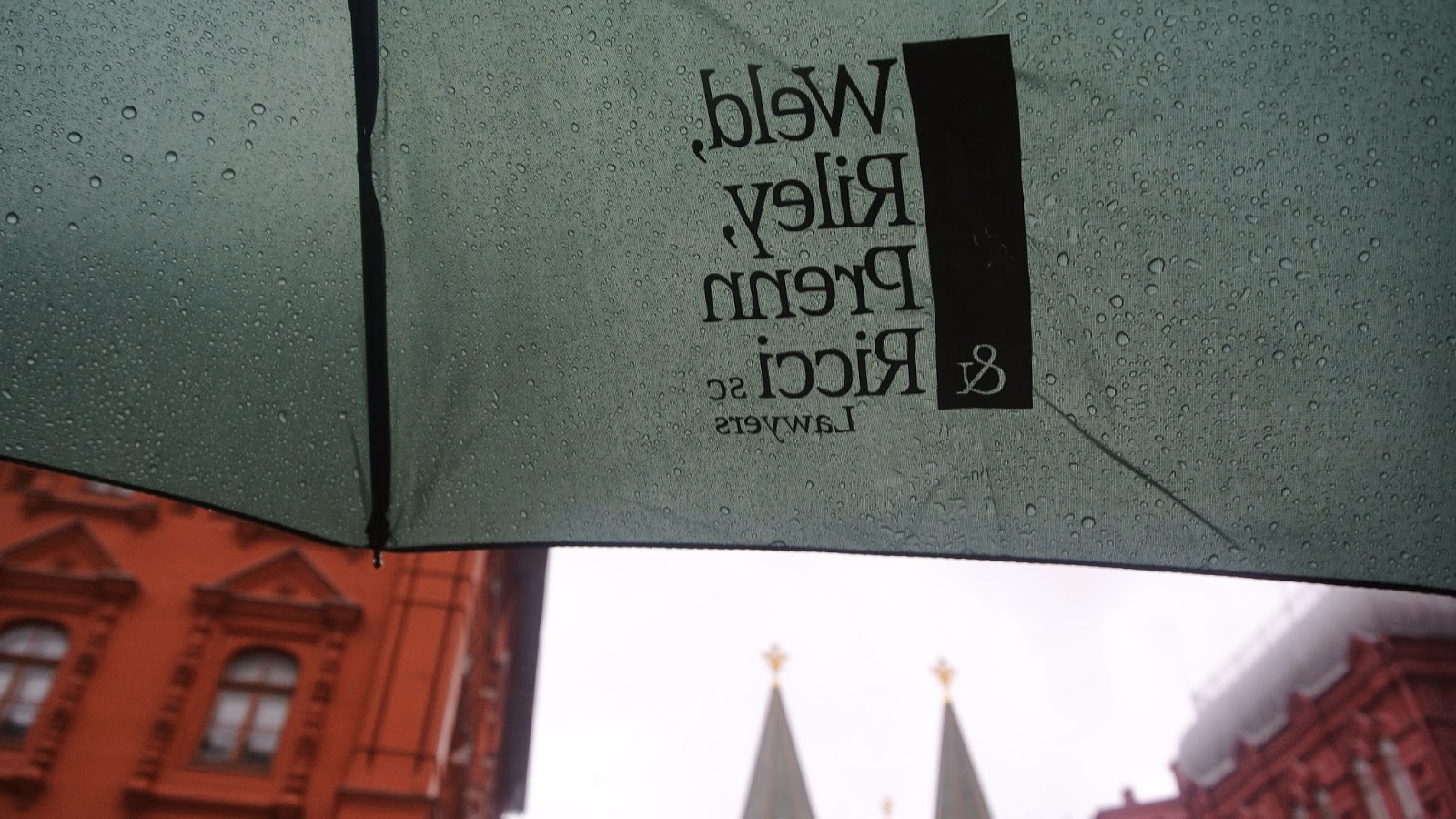
WRPR umbrella has been a great blessing!  
Maybe I'll get you some new sand clients, John?

St. Basil's rising to greet us.

At the end of the day, I am amazed and blessed.